The selection focuses on emerging companies, leaving established names such as ICEYE, Varjo, and Sensofusion outside its scope. Below is a brief introduction to the selected companies, listed alphabetically.
1. Arctic RAVN
Electronics for European drone manufacturing
Arctic RAVN develops components including electronic speed controllers and flight-control boards for drones. Its focus is on building European production capacity for the hardware that drone manufacturers depend on.
2. Distance Technologies
Sensor information in the operator’s field of view
Distance Technologies develops display technology that overlays three-dimensional information on transparent surfaces, including vehicle windscreens and helmet visors. Defence applications combine sensor feeds and operational information to help personnel understand their surroundings.
3. Kelluu
Airships for persistent aerial monitoring
Kelluu builds autonomous hydrogen-powered airships and the software behind them. Designed for long-duration operations, they provide a platform for collecting aerial data, with applications including surveillance and border monitoring.
4. Kova Labs
Drone navigation without satellite positioning
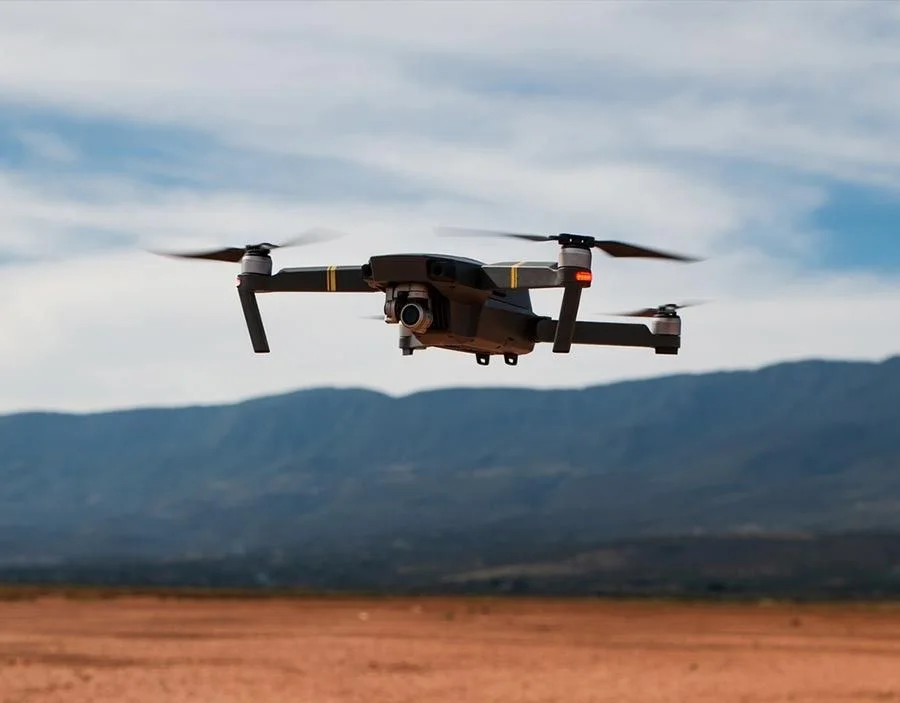
Kova Labs develops autonomous navigation technology that helps drones find their way using computer vision. By observing their surroundings and movement, drones can navigate environments where satellite positioning is unavailable, including beneath forest cover.
5. Kuva Space
Hyperspectral intelligence from orbit
Kuva Space combines hyperspectral satellite imaging with AI to analyse conditions on land and at sea. Measuring light across many spectral bands helps distinguish materials and environmental features, supporting both civilian monitoring and security applications.
6. Metaktik
Adaptable antennas for communications and sensing
Metaktik develops antenna technology for applications including satellites, military radios, and radar. Its approach uses flexible materials that conform to different surfaces, with a focus on maintaining communications in challenging environments.
7. NestAI
AI for defence systems and autonomous platforms
NestAI develops AI models, command-and-control technology, and software for unmanned systems. Its work includes collaboration with the Finnish Defence Forces and Patria, connecting AI development with defence applications.
8. Rebelvolt
Mobile power beyond diesel generators
Rebelvolt develops transportable battery-based power systems as alternatives to diesel generators. Its e-Generators bring electricity to locations without reliable grid access, serving both civilian operations and military field requirements.
9. ReOrbit
Software-defined satellite communications
ReOrbit develops communications satellites with software that can be updated from the ground. Its work addresses demand for satellite systems that countries can operate under their own control, including for defence communications.
10. Seatom Technologies
Nuclear power for maritime applications
Seatom Technologies is developing small nuclear power solutions for ships, with potential civilian and defence applications. The company is still in the development phase and is participating in NATO’s DIANA accelerator.
About the selection
This list is based on HS Visio’s selection of 10 promising Finnish defence startups, reported by Elina Lappalainen and published on 8 November 2026. HS Visio considered around 40 candidates, assessing technological innovation, relevance to defence, demonstrable defence connections, and funding or revenue.
Read the original article in HS Visio (in Finnish, subscription required).